India's Global Workforce Boom: A Quiet Revolution That Tariffs Can't Touch
In a world preoccupied with trade wars and tightening immigration policy, a quieter revolution is reshaping global business: companies continue to lean into India's workforce with unprecedented commitment.
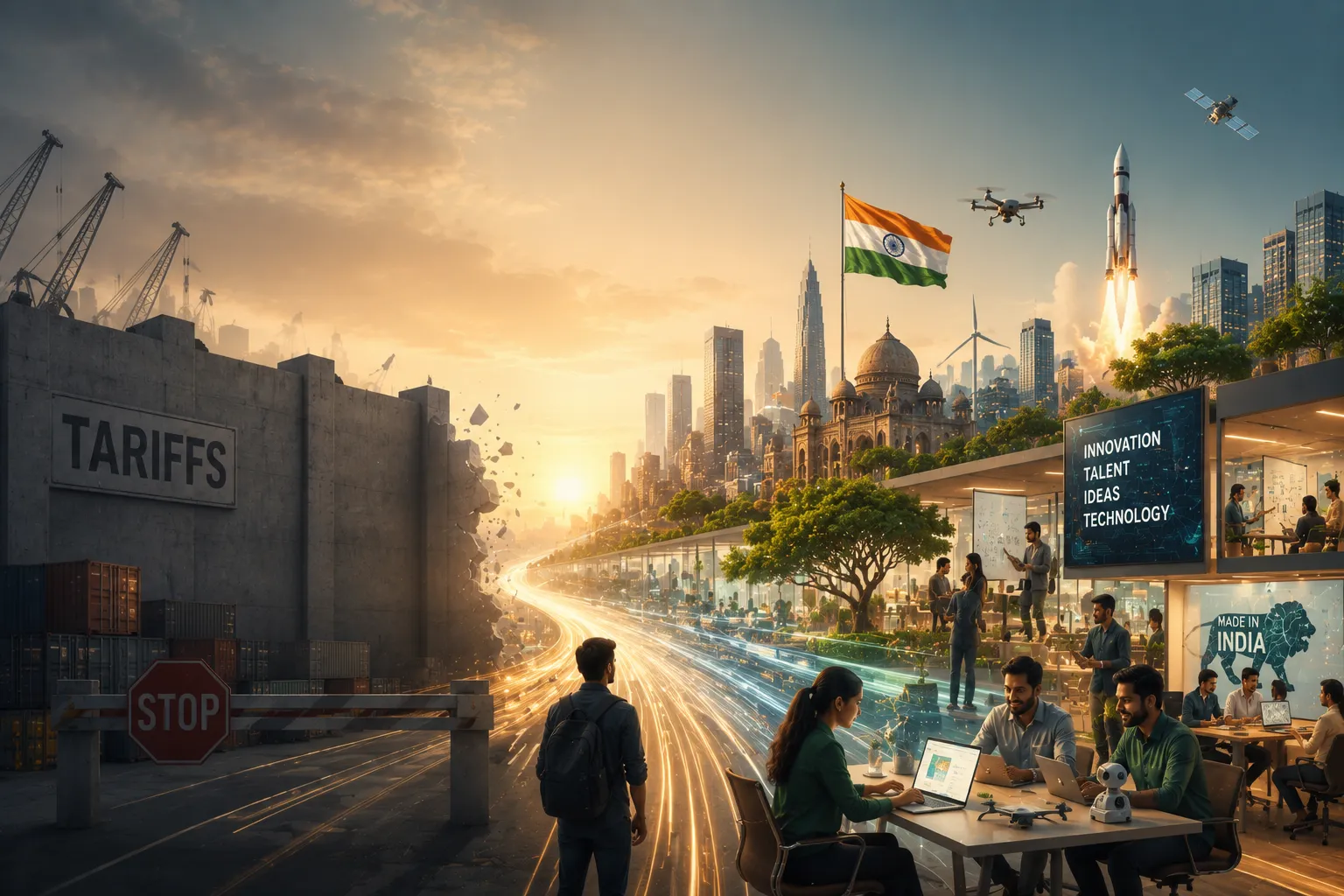
In a world preoccupied with trade wars, tariff hikes, and tightening immigration policies, a quieter yet far more transformative revolution is reshaping global business — and it’s unfolding rapidly in Indian cities. Despite President Trump’s renewed focus on aggressive protectionist measures, including import tariffs and immigration crackdowns, global companies continue to lean into India with unprecedented momentum. Why? Because India offers what today’s global economy needs most: a deep, scalable reservoir of skilled, adaptable talent.
This isn’t just about cost arbitrage anymore. It’s about capability, speed, and scale. Today, more than 2.5 million Indian professionals work directly for foreign-owned firms, and that number is expected to grow by another 600,000 to 900,000 by 2030. Across the country, there are now over 1,900 offshore corporate centres — or what are increasingly referred to as Global Capability Centers (GCCs). These hubs are fully integrated extensions of global headquarters, driving product development, engineering, marketing, data science, and even strategic decision-making. They are not auxiliary support outposts. They are central to the business itself.
Last year alone, these GCCs generated $65 billion in value, and projections suggest that figure will soar past $100 billion within the next five years. What’s even more compelling is that these operations aren’t just expanding — they’re maturing. Many of them are now led by Indian executives in vice president and C-suite roles, managing end-to-end global functions. Offices in cities like Bengaluru are designed to mirror their Western counterparts, down to the size of desks, workstations, and breakout zones. In some neighbourhoods, walking half a kilometre feels like navigating a condensed version of Silicon Valley — densely packed with AI labs, design studios, and innovation teams from some of the world’s most iconic enterprises.
Even as the current U.S. administration pushes for reshoring and applies pressure through tariffs — hoping to bring jobs “back home” — the challenge isn’t simply about geography. It’s about access to skilled talent. In the U.S., nearly a third of engineering roles go unfilled. Meanwhile, India is producing 1.2 million engineers every single year. The pandemic only hastened this shift, proving once and for all that high-performing, distributed teams can work seamlessly across time zones and continents. When location became less important, skill and capability rose to the forefront — and India stepped into that role with confidence.
The real estate boom in cities like Hyderabad, Chennai, Pune, and Bengaluru is being driven not by traditional demand, but by the rapid expansion of these GCCs. Last year, 50 new global centres were set up across India, and another 130+ are expected to launch in 2025. These aren’t call centres from the early 2000s. These are strategic nerve centres — housing global product leads, marketing directors, engineers, and innovation architects. The chain of command in many organizations no longer flows in one direction. It weaves between California, Bengaluru, Prague, and beyond — as India becomes not just a participant in global operations, but a driver of them.
One senior executive captured the sentiment perfectly in an article: “You can’t find 5,000 skilled professionals in one U.S. city to do this kind of work. But in India? You can.” It’s this unmatched scale and agility that is turning India into the preferred destination for building the future of work. What began as a trickle in the early outsourcing days has now become a wave — large, fast-moving, and unstoppable.
This is the quiet revolution. It’s not playing out in political speeches or on news tickers, but in coding labs, design studios, data hubs, and boardrooms across Indian metros. While tariffs may slow down the movement of steel or semiconductors, they cannot contain the flow of knowledge, innovation, or digital expertise. This isn’t just globalization — it’s a structural shift in how and where value is created.
India is no longer the world’s back office. It has become the world’s brain trust — and no wall, policy, or tariff control can put that genie back in the bottle.