India's AI Ambition: The Road to Global Leadership
India's aspiration to become a global AI leader is widely recognized — but the journey is marked by both immense potential and real challenges around investment, innovation culture, and structural reform.
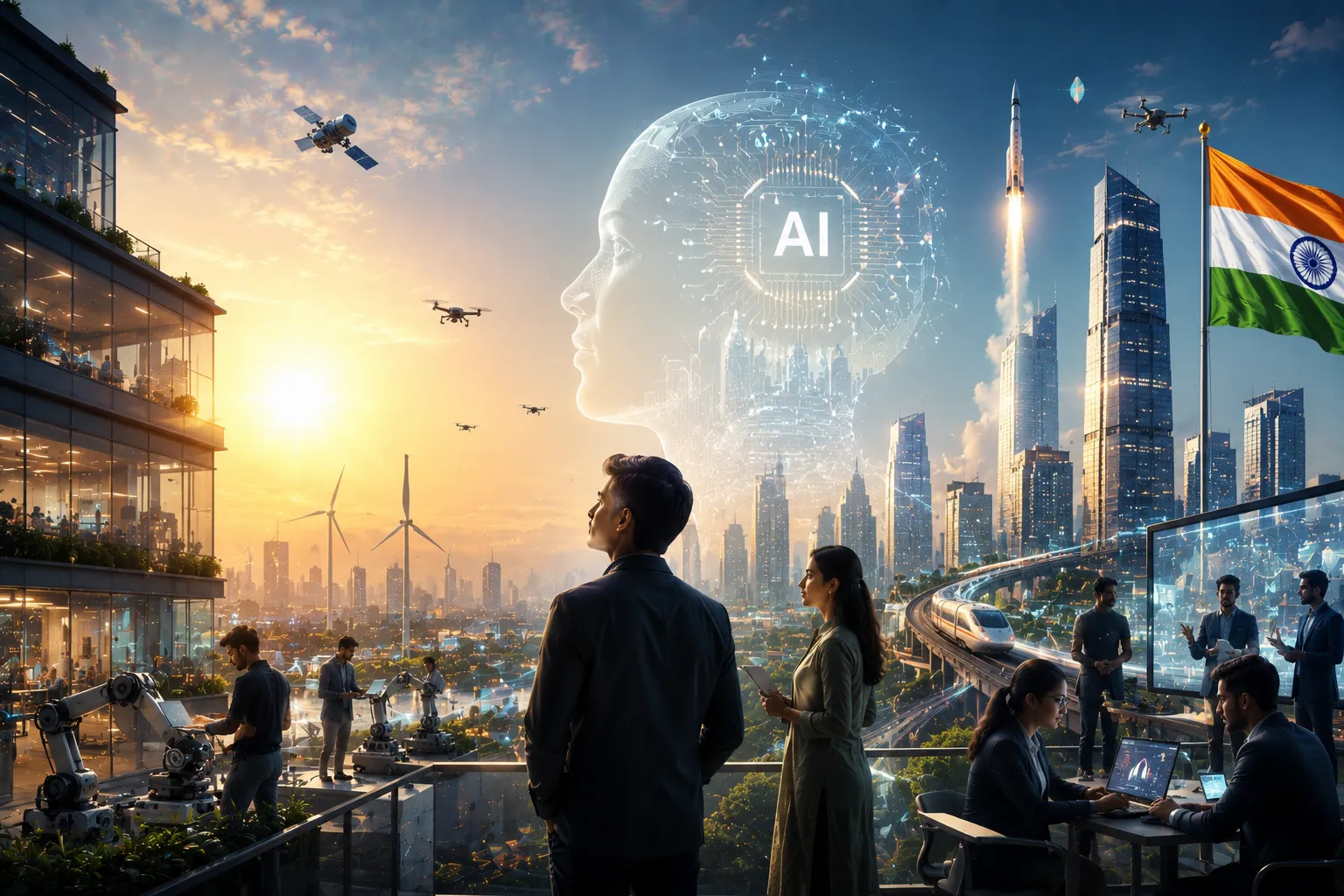
India’s aspiration to become a global leader in Artificial Intelligence (AI) is widely recognized, but the journey toward this goal is marked by both immense potential and significant challenges. As the world increasingly embraces AI-driven innovation, India’s position in the global tech race prompts important questions about investment, innovation culture, and the need for structural reforms.
The Investment Gap: India’s Place in the Global Arena
A critical factor in India’s AI journey is the level of investment in research and development (R&D). While leading global economies invest over 2% of their GDP in R&D, India’s investment hovers around 0.65%. This gap places India at a disadvantage, especially when compared to other tech powerhouses of the world. The contrast is evident in sectors where consistent, long-term investment has paid off—such as space technology—but similar commitment is yet to be seen in AI and deep tech.
Recent global rankings highlight this disparity: India attracted $1.16 billion in private AI investments in 2024, ranking 12th globally, while the US and China have raised hundreds of billions in AI funding over the past decade. Despite this, India’s private AI investment over the same period totals $11.29 billion—a sign of growing momentum but still far from the scale of global leaders.
Innovation Culture: Beyond “Publish or Perish”
The culture of innovation in India’s academic and research institutions has traditionally been shaped by a “publish or perish” mindset, where academic output is prioritized over real-world impact. While this has led to a high volume of research publications, it has not always translated into commercial success or technological breakthroughs. The recent focus on patent filings and startup creation is a positive shift, but progress is still hampered by slow, bureaucratic processes—especially for deep tech ventures.
Collaboration and Bureaucratic Bottlenecks
One of the most persistent challenges in India’s innovation ecosystem is the lack of seamless collaboration between government, academia, and industry. Bureaucratic delays and complex approval processes often slow down progress. For example, procuring essential equipment in public institutions can take nearly a year due to cumbersome procedures. Similarly, government schemes designed to support startups are difficult to access, limiting their effectiveness.
New Institutions and the Future of Indian AI
The establishment of the National Research Foundation (NRF) represents a step forward in addressing some of these challenges. By streamlining funding decisions and reducing bureaucratic interference, the NRF has the potential to accelerate innovation. However, its impact will depend on how effectively it can foster collaboration and address issues like intellectual property (IP) sharing between government, industry, and academia.
The Way Forward: Investment, Reform, and Collaboration
To realize its AI ambitions, India must take bold steps on several fronts:
- Increase R&D Investment: Closing the investment gap with global leaders is essential for building a robust innovation ecosystem.
- Cultivate a Culture of Real-World Impact: Shifting the focus from academic output to practical applications, patents, and successful startups.
- Streamline Bureaucracy: Simplifying approval processes and reducing red tape to speed up innovation.
- Strengthen Partnerships: Encouraging closer collaboration between government, academia, and industry to translate research into commercial success.
- Leverage New Initiatives: Making the most of institutions like the NRF to drive meaningful change.
CEO Insights: The Broader Impact and Opportunities
Recent reports underscore the transformative potential of AI for India’s economy. The AI market in India is projected to reach $7.8 billion by 2025, with the AI services segment growing at a remarkable CAGR of 35.8%. By 2034, the market could expand to $45.7 billion, reflecting a sustained and accelerating pace of adoption.
AI’s impact is not limited to technology firms. Industries such as healthcare, financial services, retail, and manufacturing are poised for dramatic transformation. For instance, AI in medical diagnostics is rapidly evolving, with startups integrating AI across the healthcare spectrum to improve diagnostic accuracy, speed, and accessibility. The government’s increased healthcare spending—over INR 900 billion in 2024—further supports this growth.
At a macro level, AI is expected to impact 38 million employees in India’s organized sector, potentially driving a 2.61% boost in productivity by 2030. Enterprises will need to rapidly reorient themselves, focusing on data accessibility, compute infrastructure, and responsible governance. The imperative is clear: businesses must invest in skilling, apprenticeship schemes, and new business models to harness AI’s full potential and mitigate workforce disruption.
IDC forecasts that AI spending in India will grow 2.2 times faster than overall digital technology spending in the next three years, generating an economic impact of over $115 billion by 2027.Business leaders are expected to demand a minimum 70% success rate on generative AI initiatives to achieve operational efficiencies and new revenue growth.
Conclusion
India’s ambition to lead in AI is clear, but achieving this vision will require more than aspiration. It demands increased investment, cultural shifts, and structural reforms. By addressing these challenges head-on, India can bridge the gap between promise and reality, positioning itself as a true global leader in AI and technology.
For CEOs and business leaders, the message is clear: the time to act is now. The organizations that embrace AI-driven transformation, foster collaboration, and invest in talent and infrastructure will be the ones to shape India’s future as a global AI powerhouse.