Why GCC Leaders in India Are Poised to Shape the Next Wave of Global Leadership
Reflections from 30 days spent meeting multinational, institutional, and government leaders across the U.S. — on why India's GCC leaders are displaying a global mindset that increasingly influences leadership thinking worldwide.
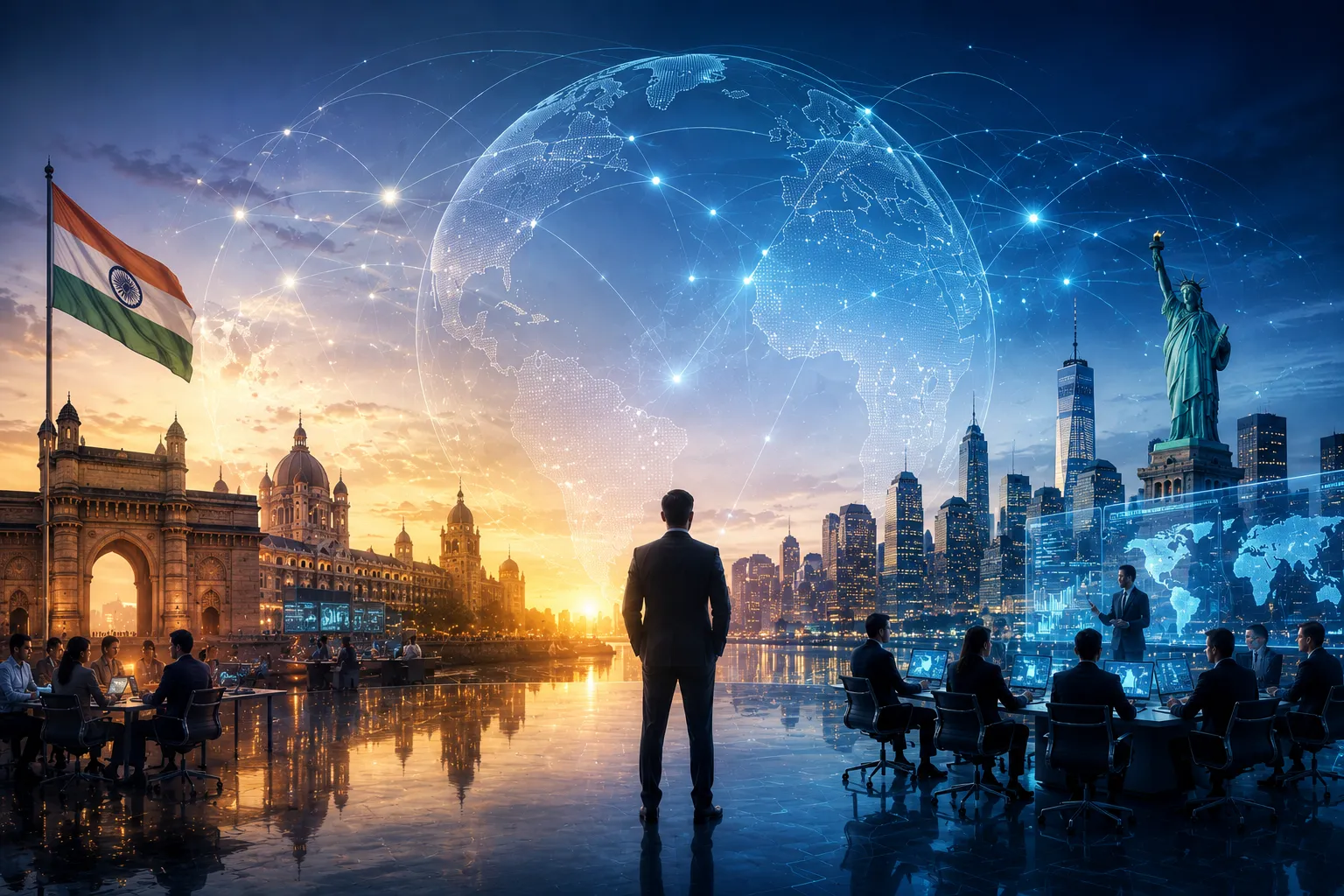
Over the past month, I had the opportunity to travel across the United States, meeting leaders from multinational corporations, global institutions, and government bodies. These conversations spanned time zones, cultures, and geopolitical contexts, and they brought with them a rich mix of intellectual, business, and global policy discussions. But among all the insights that emerged, one theme stood out consistently—the remarkable global mindset displayed by leaders in India’s Global Capability Centers (GCCs) and how this mindset contrasts, complements, and increasingly influences leadership thinking across parent organizations around the world. It encouraged me to pause, reflect, and capture my thoughts on why a global mindset matters more than ever and what it truly demands from today’s global leaders.
When we look back 150 years, global business worked very differently. Nations focused on producing within their boundaries and selling to the world—sometimes through fair means, sometimes through force. Dominance was the lens, muscle power dictated outcomes, and the doctrine of the winner became the rule of law. Today, the world has shifted dramatically. Inclusivity has become more valuable than exclusivity. Market development outweighs market capture. Organizations now manufacture at the lowest possible cost, assimilate cultures, and operate with structures that are simultaneously global and local. Modern corporations function as tightly integrated global networks, designed to serve diverse customer markets across continents. They work with global workforces, global supply chains, global markets, and global virtual teams—and almost every global organization either has a GCC in India or is planning to build one.
This reality raises an important question: What does this mean for us as leaders? To succeed in this interconnected world, we must become global leaders—leaders who influence individuals, teams, and organizations across cultural, political, and institutional boundaries to collectively achieve shared goals. A global leader needs more than skills; they require a global mindset. A global mindset is the collection of attributes that enables this kind of leadership—attributes that help us see the world broadly, navigate differences sensitively, and operate seamlessly in multicultural environments.
This is especially relevant for GCCs in India. Their roles today are inherently global—interacting daily with teams across continents, leading virtual and hybrid global teams, and taking ownership of products and services that directly impact the parent organization’s performance worldwide. With this responsibility comes the expectation to build global partnerships, manage sustainable and distributed teams, develop cultural competence, and contribute to creating competitive advantage. Yet, with these expectations come challenges too: communicating effectively across cultures, understanding and influencing stakeholders who see the world differently, setting direction despite differing norms and measurement systems, and ensuring performance alignment across geographies.
Communication sits at the center of these challenges. While most of us communicate in English globally, we often forget that the same words do not always translate into the same meaning. What is common in our daily context may not be common globally, and our frame of reference may require constant adjustment. Misalignment in meaning makes it difficult to understand, influence, or even define performance in the same way across teams. This is where cultural acceptance becomes essential—not just knowing cultural differences but truly recognizing and respecting them.
This also highlights the difference between a domestic mindset and a global mindset. A domestic mindset thrives on deep functional expertise, hierarchical structures, step-by-step prioritization, individual responsibility, and eliminating surprises. A global mindset requires the opposite: the ability to balance contradictions, navigate paradoxes, adopt process-oriented thinking, embrace diversity and teamwork, and welcome change—even surprises—as opportunities. In a global landscape, comfort with ambiguity becomes an advantage, not a threat.
Developing this global mindset requires building three kinds of capital. Intellectual capital includes global business savvy, cognitive complexity, and a cosmopolitan outlook. Psychological capital reflects passion for diversity, self-assurance, and a quest for adventure and exploration. Social capital comprises attributes like intercultural empathy, interpersonal impact, and diplomacy. Together, these enable leaders to not just work globally but think and behave globally.
Interestingly, India has a unique advantage in building global mindsets. We are home to one of the most complex ecosystems in the world—multiple languages, countless subcultures, religious diversity, and intricate social structures. We navigate these complexities effortlessly every day. This lived experience equips Indian leaders with an innate ability to adapt, understand diverse perspectives, and operate across cultural boundaries. In many ways, the global mindset is already part of our DNA—it only needs to be nurtured and channelled intentionally.
As GCCs rise in global influence, the world is looking increasingly toward India for leadership that is holistic, culturally intelligent, and globally aligned. The question is no longer whether we can lead globally, but how consciously we choose to strengthen the mindset that enables it.